You walk into a restaurant and it looks perfect. Lighting is warm. The menu is tight. The bar has that low glow thing going on.
Then you sit down and within five minutes you are leaning forward like you are trying to read someone’s lips. You laugh, but it’s that half laugh where you didn’t catch the joke. The table next to you is somehow in your conversation. And by dessert your brain feels… tired.
That’s restaurant acoustics. And it’s fixable. Without turning the place into a recording studio. Without killing the vibe.
Why restaurants get loud so fast
A restaurant isn’t loud just because people are loud. It’s loud because sound sticks around.
The usual suspects:
- Hard surfaces everywhere: glass, tile, concrete, brick, mirrors, hardwood, sealed ceilings. Sound hits them and bounces, and bounces again.
- Open ceilings (or exposed deck): looks cool, sounds like a gym.
- Long, flat walls: perfect for reflections. Also perfect for that “shouty” feeling.
- Crowd effect: as the room gets louder, people talk louder to compensate. The Lombard effect. It’s a real thing and it snowballs.
So the goal is not “silence”. The goal is shorter reverberation so speech stays clear and the room stops amplifying itself.
The sweet spot: quieter, not dead
A lot of owners hear “acoustic panels” and picture a dull, muffled room. Like the vibe got padded.
That happens when you only absorb high frequencies, or you overdo it in weird places. But good restaurant treatment is more like tuning than muting.
What you want:
- Clear conversation at the table
- Energy still in the room
- Music that feels intentional instead of chaotic
- Staff who aren’t exhausted halfway through service
It’s about balance. And placement.
Start with the ceiling. Always
If I could only treat one surface in most restaurants, it would be the ceiling. It’s typically the largest uninterrupted plane and tends to catch everything.
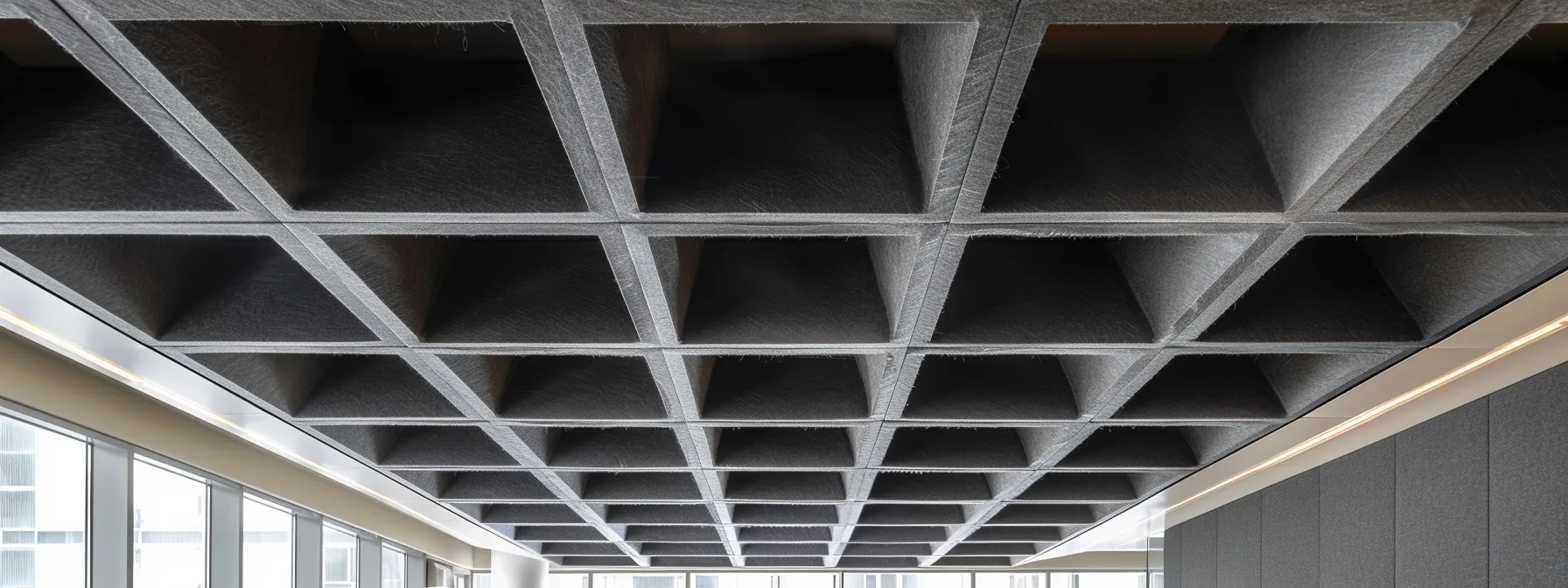
Ceiling treatment is also a strategic point where you can reduce noise without altering the overall aesthetic too much, especially if a drop ceiling grid is already in place. A really clean option is using acoustic ceiling panels designed for T bar grids, which swap in like normal tiles but actually absorb sound. Imagine Acoustics offers ceiling solutions specifically built for interior spaces like restaurants, allowing you to spec them without redesigning your whole room.
If you have an exposed ceiling, there are still options available. However, it becomes more about design integration. Suspended panels, baffles, or strategically placed clouds can be employed to make it look like it belongs. Because it can.
Walls matter, but treat the right walls
Walls are tricky because restaurants use them for branding, art, mirrors, wine displays, and more. Therefore, you don’t want to just apply grey rectangles everywhere.
The smarter approach is to treat reflective zones:
- The long wall running alongside banquettes
- The wall opposite a long wall (parallel surfaces are brutal)
- The back wall of the dining room where sound stacks up
- Areas near the bar where noise tends to peak
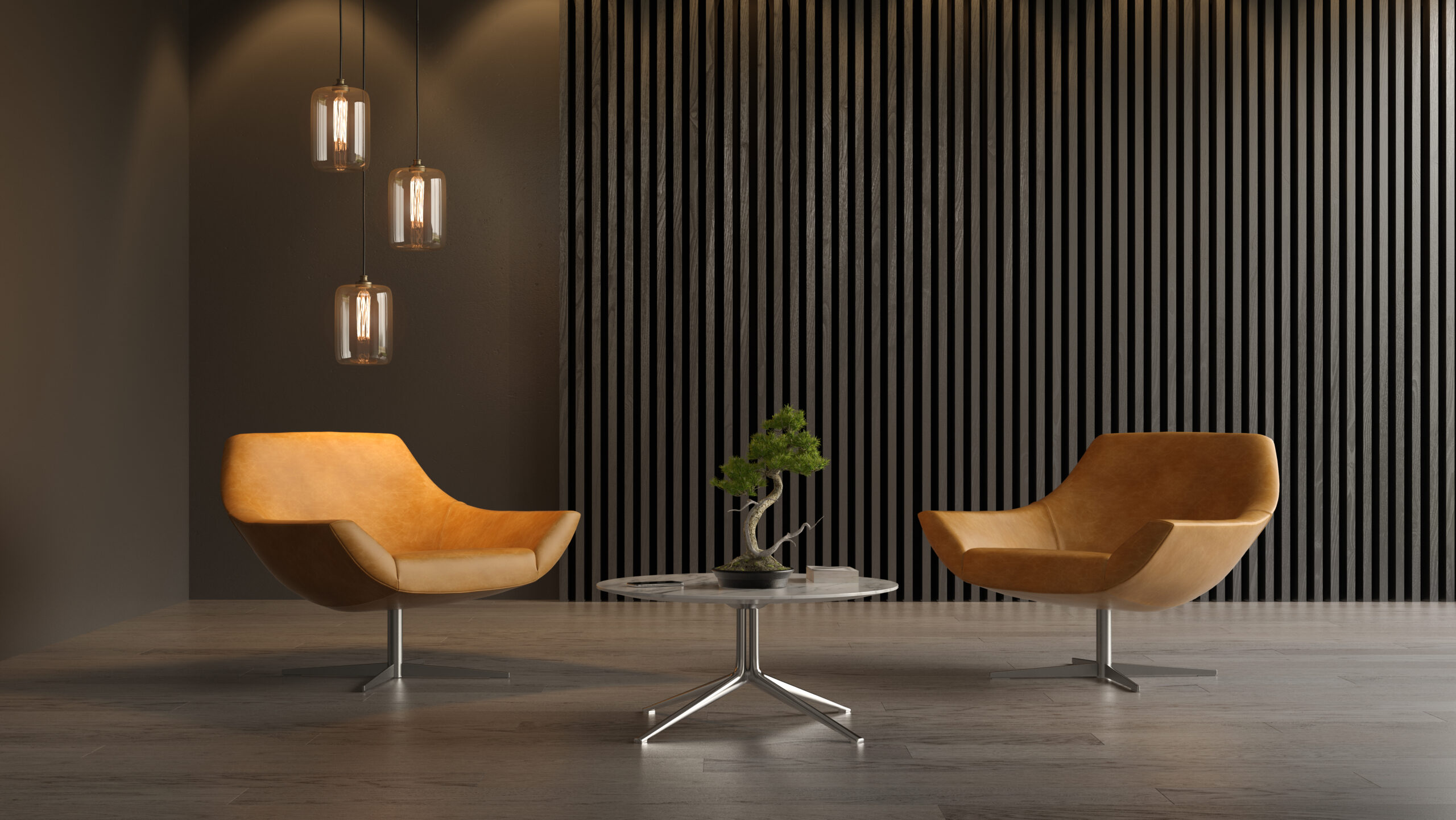
This is where wood slat acoustic panels can serve a dual purpose. They appear upscale and architectural while providing warm aesthetics rather than looking like mere “sound treatment”. Behind these slats lies absorption that helps minimize reflections.
Imagine Acoustics has design-forward slat wall products that fit this exact use case. You can maintain the restaurant’s ambiance while making it easier to be in.
Soft stuff helps, but it’s rarely enough
Yes, upholstery, curtains, and tablecloths absorb some sound. They help.
But in modern spaces, you often have:
- leather or vinyl seating (reflective)
- minimal window coverings (none)
- bare tabletops (reflective)
- lots of glass (very reflective)
So soft goods usually don’t move the needle enough on their own. They’re supporting actors, not the fix.
What “good” treatment looks like (in real life)
Achieving good restaurant acoustics usually isn’t about making one huge change. It’s about implementing a few targeted strategies.
A typical combination might include:
- Acoustic ceiling panels installed across the main dining area
- A slat acoustic feature wall on one long reflective surface
- A couple of divider elements near bar or high traffic zones
- Perhaps a felt-based accent piece where you need it, but want it subtle
The end goal is not silence. It’s comfort. You still hear the life in the room, but you don’t have to fight it.
If you’re planning a new restaurant, do this early
Acoustics are cheapest and easiest when they are part of the design plan from the start, rather than a rescue mission after the first month of service.
If you’re designing or renovating, it’s worth picking finishes with sound in mind. Even one or two absorptive surfaces can save you from having to overcorrect later.
And if you want products that actually look like they belong in a hospitality space, browse Imagine Acoustics at https://imagineacoustics.ca/. They offer innovative solutions that blend seamlessly into restaurant and commercial applications. It’s helpful to see what modern “acoustic” products can look like as you start planning your space.
FAQs (Frequently Asked Questions)
Why do restaurants get loud so quickly even if people aren’t shouting?
Restaurants become loud not just because of loud conversations but mainly due to sound reflections. Hard surfaces like glass, tile, concrete, and exposed ceilings cause sound to bounce repeatedly. Long flat walls create echoes, and as noise rises, people speak louder to compensate (the Lombard effect), leading to a snowballing increase in volume.
What is the goal of acoustic treatment in restaurants if not complete silence?
The aim is to shorten reverberation time so speech remains clear and the room doesn’t amplify noise excessively. Effective acoustic treatment balances quieter spaces without making the environment feel dead or muffled, preserving energy, conversation clarity, intentional music ambiance, and reducing staff fatigue.
Why is treating the ceiling important in restaurant acoustics?
The ceiling is usually the largest uninterrupted surface and captures much of the sound. Treating it with acoustic ceiling panels—especially those designed for drop ceiling grids—can significantly reduce noise without altering the restaurant’s aesthetic. For exposed ceilings, suspended panels or baffles can be integrated into the design to absorb sound effectively.
How should walls be treated acoustically without compromising restaurant design?
Instead of covering all walls with acoustic panels, focus on reflective zones such as long walls beside banquettes, opposite parallel walls, back dining room walls where sound stacks up, and noisy bar areas. Using design-forward options like wood slat acoustic panels provides absorption while maintaining upscale aesthetics and supporting branding elements like art or wine displays.