Walk into any modern office and you can almost predict the layout.
Big open area. A few meeting rooms that are always booked. A kitchen that somehow becomes the loudest place in the building by 10:07 am. And then, in the corner, usually near the windows, a couple of office phone booths. Those little pods that look futuristic, cost a lot, and get used for everything except phone calls.
So… do you still need them?
The honest answer is: sometimes yes. Sometimes no. And sometimes you only think you need them because the rest of your space is doing nothing to control sound.
Let’s talk it through like a real person who has actually worked in a noisy office.
Why phone booths became a thing in the first place
Phone booths didn’t show up because people suddenly loved tiny rooms.
They showed up because open plan offices got loud. Like, constantly loud.
And it’s not just volume. It’s the type of noise. Random conversations you can almost understand. Someone laughing behind you. A sales call that you now know way too much about. Printer sounds. Keyboard clacks. HVAC hum.
Your brain treats all of that like it might be important, so it keeps checking in. That’s the killer.
Phone booths became the quick fix. Need privacy. Step in. Need a quiet spot. Step in. Need to take a Zoom call without annoying everyone else. Step in.
In a lot of offices, they honestly saved people from losing it.
What’s changed (and why this question even matters)
A few things shifted.
- Hybrid work. Some teams are in office two days a week. Others are in four. The space usage is less predictable, which makes it harder to justify pricey pods sitting empty.
- Video calls replaced phone calls. Booths used to be about “phone privacy.” Now it’s camera angles, lighting, airflow, and whether you look like you’re being held in a closet.
- People are more sensitive to “bad spaces” now. After working at home, a lot of people realized they can concentrate better without constant office noise. They come back in and… it’s chaos again.
So yes, booths are still relevant. But they’re not automatically the right solution.
The real question: what problem are you solving?
This is where most office designs go slightly off the rails.
A phone booth solves a very specific problem: one person needs a short burst of acoustic separation.
It does not solve:
- a generally echoey office
- a loud, reflective ceiling and glass walls
- poor zoning (quiet work mixed with collaboration zones)
- constant background chatter
- a space that just feels “sharp” and exhausting
If the whole room is reverberant, adding two booths is like putting a band aid on a broken window. Sure, you can hide in the booth. But the rest of the team is still sitting in the noise.
When you still absolutely need office phone booths
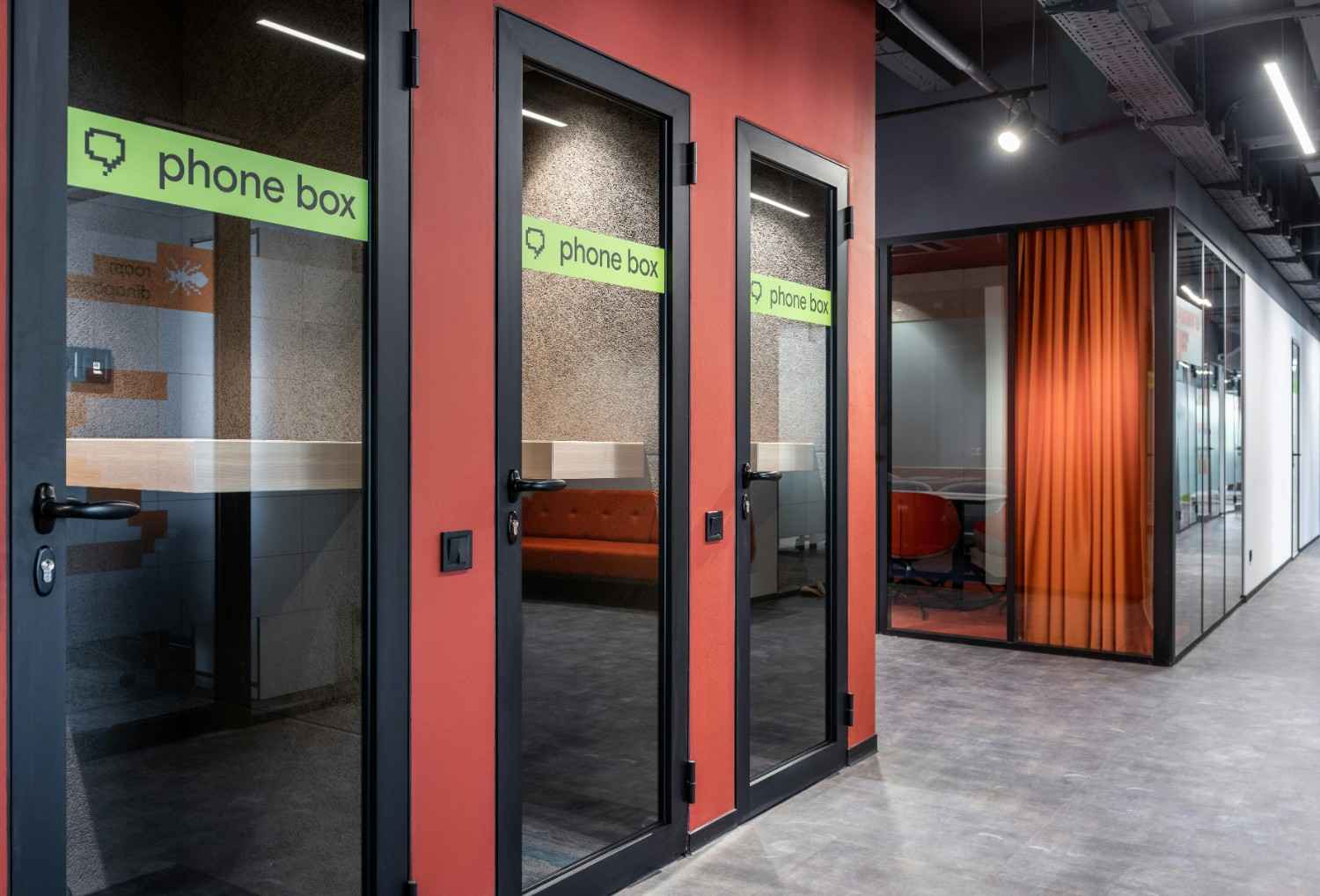
There are situations where booths are genuinely worth it.
1. You have frequent confidential calls
HR, legal, finance, management, health related services. If privacy matters and you don’t have enough small rooms, booths help. Simple.
2. You don’t have enough meeting rooms for quick calls
Not every call needs a boardroom. Booths stop people from booking meeting rooms for a 12 minute check in.
3. You have a sales or support team in an open space
If your business runs on calls, booths reduce conflict fast. Otherwise everyone is annoyed all day.
4. Your office is designed around “activity based working”
If people float between collaboration areas and focus zones, booths become part of the toolkit. Like a standing desk or a small huddle room.
In these cases, booths are not just a trend. They’re infrastructure.
When you probably don’t need them (or you need fewer)
This is the part that saves money, and also makes offices feel better.
1. Your issue is echo, not privacy
If the room rings when people talk, that’s a treatment problem. You want absorption, not little boxes.
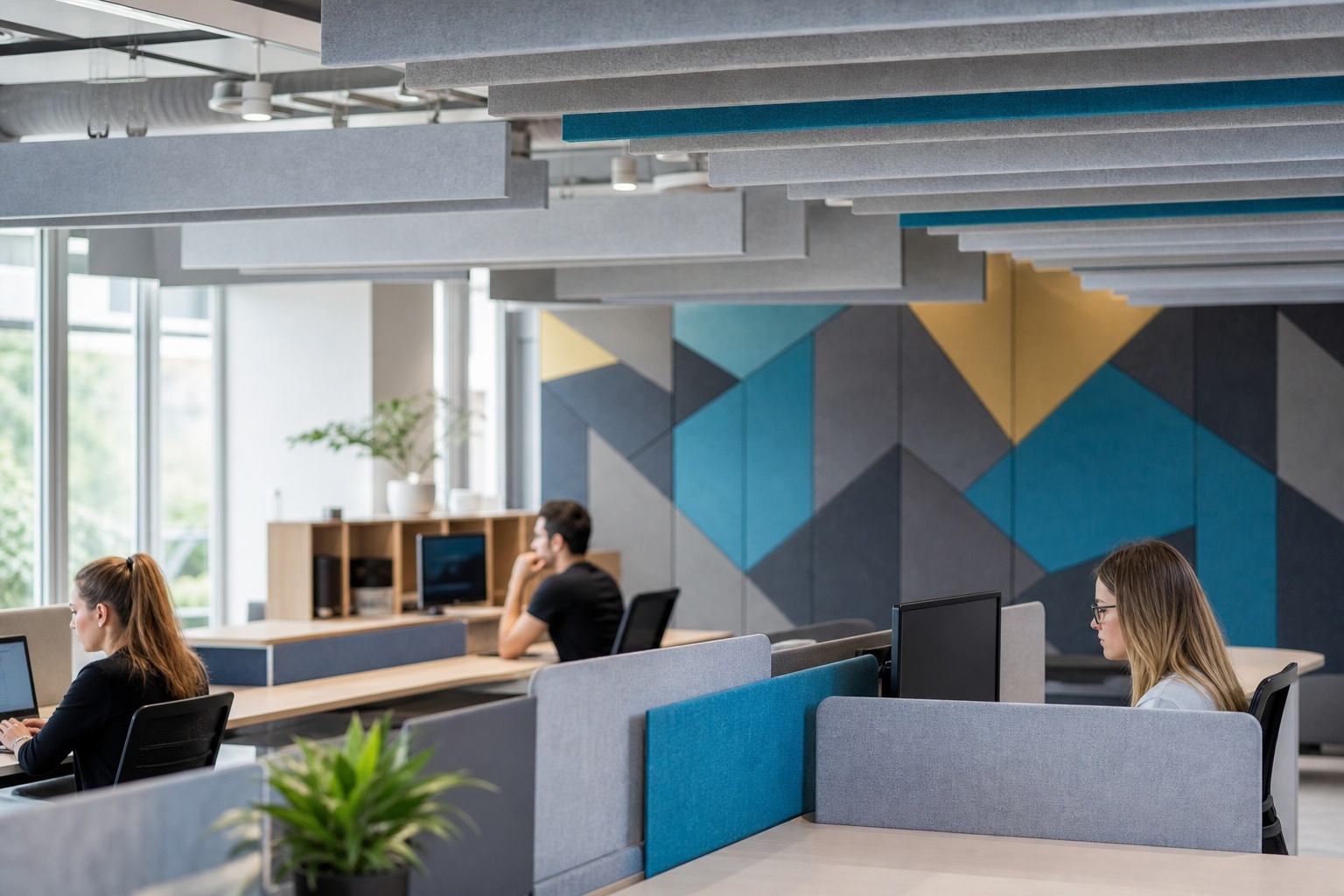
Instead of investing in phone booths, consider using acoustic wall and ceiling products which can change the entire feel of the office, not just create two tiny escape pods. For example, adding acoustic ceiling panels in a drop ceiling grid or using wall slat panels with backing absorption can reduce overall reverberation so conversations don’t travel as aggressively.
2. Your office already has underused small rooms
A lot of offices have “storage rooms” or tiny meeting rooms that could be improved with proper acoustic panels, a door sweep, and a soft ceiling. With these enhancements, you suddenly have a call room. No pod needed.
3. People hate using the booths you already have
This happens more than anyone admits.
Booths can be stuffy. Or the fan is loud. Or the lighting is weird. Or they feel cramped on camera. If they’re unpleasant, people will just take calls at their desk again and you’re back where you started.
A better approach: treat the space, then add booths only where they make sense
If you want a practical order of operations, it’s usually this:
- Reduce the echo in the open office first
- Create clear zones (quiet work away from collaboration)
- Add barriers where needed (desk dividers, open space dividers)
- Then decide how many booths you still need
This is where companies like Imagine Acoustics come in handy, because you can treat the actual room with design forward products instead of defaulting to pods for everything. Their shop has options like acoustic wall slat panels, ceiling panels for grid ceilings, felt solutions, desk dividers, and open space dividers that can calm a room down without turning it into a maze.
If you’re trying to make an office feel quieter without killing the look, it’s worth browsing: https://imagineacoustics.ca/
FAQs (Frequently Asked Questions)
Why did office phone booths become popular in modern workplaces?
Office phone booths became popular as a quick fix to the constant noise and lack of privacy in open plan offices. They provide acoustic separation for individuals needing privacy, quiet spots for calls, or Zoom meetings without disturbing others.
How has hybrid work impacted the need for office phone booths?
Hybrid work, with teams spending varying days in the office, has made space usage less predictable. This shift challenges justifying expensive phone booths that may sit empty part of the time, prompting a reevaluation of their necessity.
What specific problems do office phone booths effectively solve?
Phone booths solve the problem of providing one person with short bursts of acoustic separation for confidential or quick calls. They are ideal when there is a need for privacy, insufficient small meeting rooms, or teams like sales making frequent calls.
When might you not need office phone booths in your workspace?
If the main issue is echo or reverberation rather than privacy, investing in acoustic treatments like ceiling and wall panels is more effective. Also, if your office already has underused small rooms or if employees dislike using existing booths due to discomfort, pods may be unnecessary.