Why Home Office Acoustics Matter for Productivity
Remote work is here to stay, but so are the distractions that come with it. Barking dogs, street traffic, household conversations, and even the echo of your own voice on video calls can chip away at focus and professionalism. Research shows that unwanted noise can reduce cognitive performance by up to 66%, making it one of the biggest hidden productivity killers in any home workspace.
The good news? You don’t need a full construction project to soundproof a home office. With the right combination of acoustic solutions—from budget-friendly quick fixes to professional-grade panels—you can dramatically reduce noise and create a workspace where deep work actually happens.
Common Noise Problems in Home Offices
Before choosing a solution, it helps to understand what kind of noise you’re dealing with. Home office noise generally falls into three categories:
Airborne Noise
This includes voices, music, traffic sounds, and any noise that travels through the air and penetrates walls, windows, and doors. It’s the most common complaint among remote workers and the easiest to address with proper acoustic treatment.
Impact Noise
Footsteps from an upstairs room, door slams, and vibrations from appliances fall into this category. Impact noise travels through the building structure itself, making it harder to block without physical modifications.
Echo and Reverberation
Hard surfaces like drywall, hardwood floors, and glass windows bounce sound waves around the room, creating echo. This doesn’t just add to perceived noise levels—it also makes your voice sound hollow and unprofessional on video calls.
Acoustic Panel Solutions for Home Offices
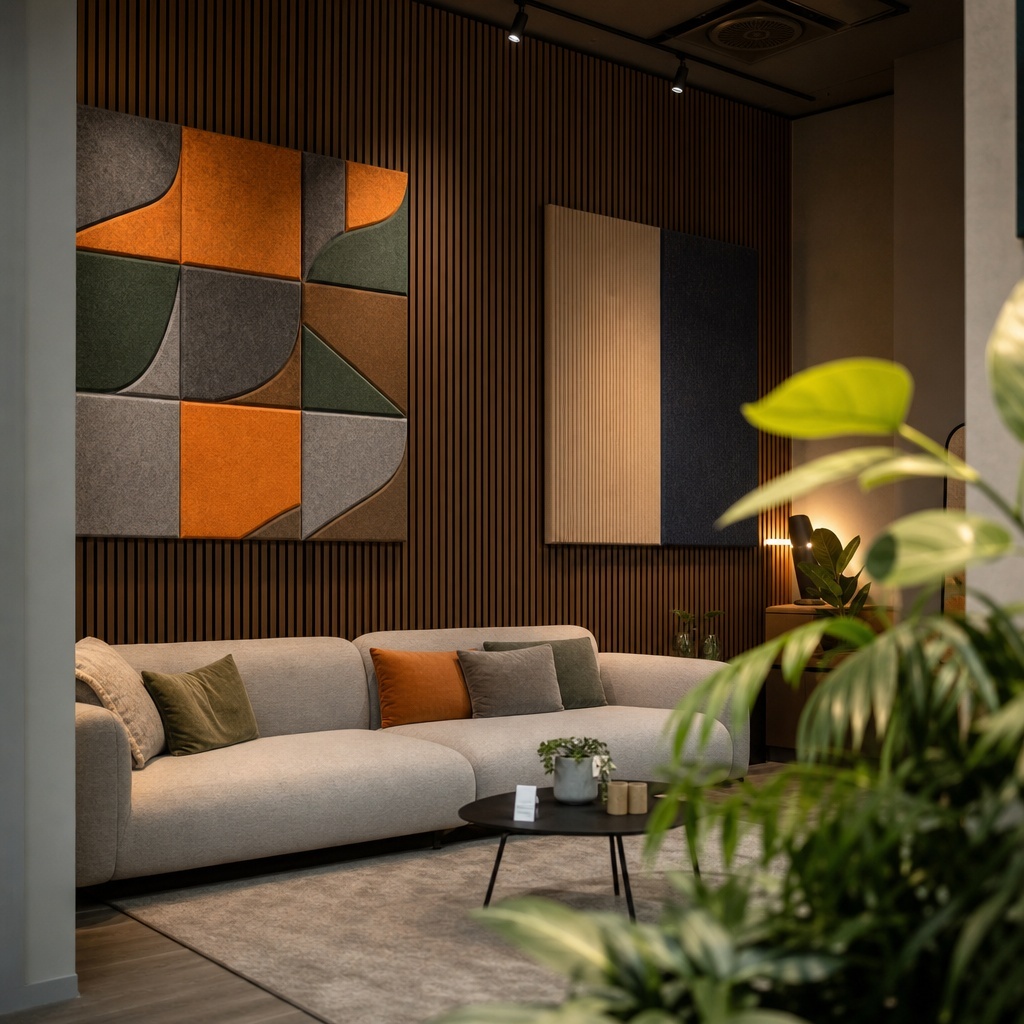
Acoustic panels are the most effective and visually appealing way to tackle echo, reverberation, and moderate airborne noise in a home office. Unlike bulky foam tiles, modern acoustic wall panels come in designer finishes that complement your décor.
Where to Place Acoustic Panels
Strategic placement matters more than quantity. Focus on these key areas:
- The wall directly behind your monitor. This is the first surface your voice hits during video calls and the biggest source of echo in most setups.
- The wall behind your seated position. Sound bounces off this surface and returns to your microphone, creating that distracting “room tone.”
- Any large flat wall within 1.5 metres of your desk. These reflection points amplify both incoming and outgoing noise.
- Ceiling panels or clouds. If your office has hard ceilings, overhead panels reduce vertical reflections significantly.
Not sure how many panels your space needs? Use Imagine Acoustics’ panel estimator tool for a personalised recommendation based on your room dimensions.
Types of Acoustic Panels
Different panel styles serve different purposes:
- Fabric-wrapped panels: Excellent sound absorption with a clean, professional look. Ideal for walls behind desks and monitors.
- Wooden slat panels: Combine noise reduction with a modern aesthetic. Perfect for accent walls in home offices that double as video-call backgrounds. Learn more about acoustic slat wall panels.
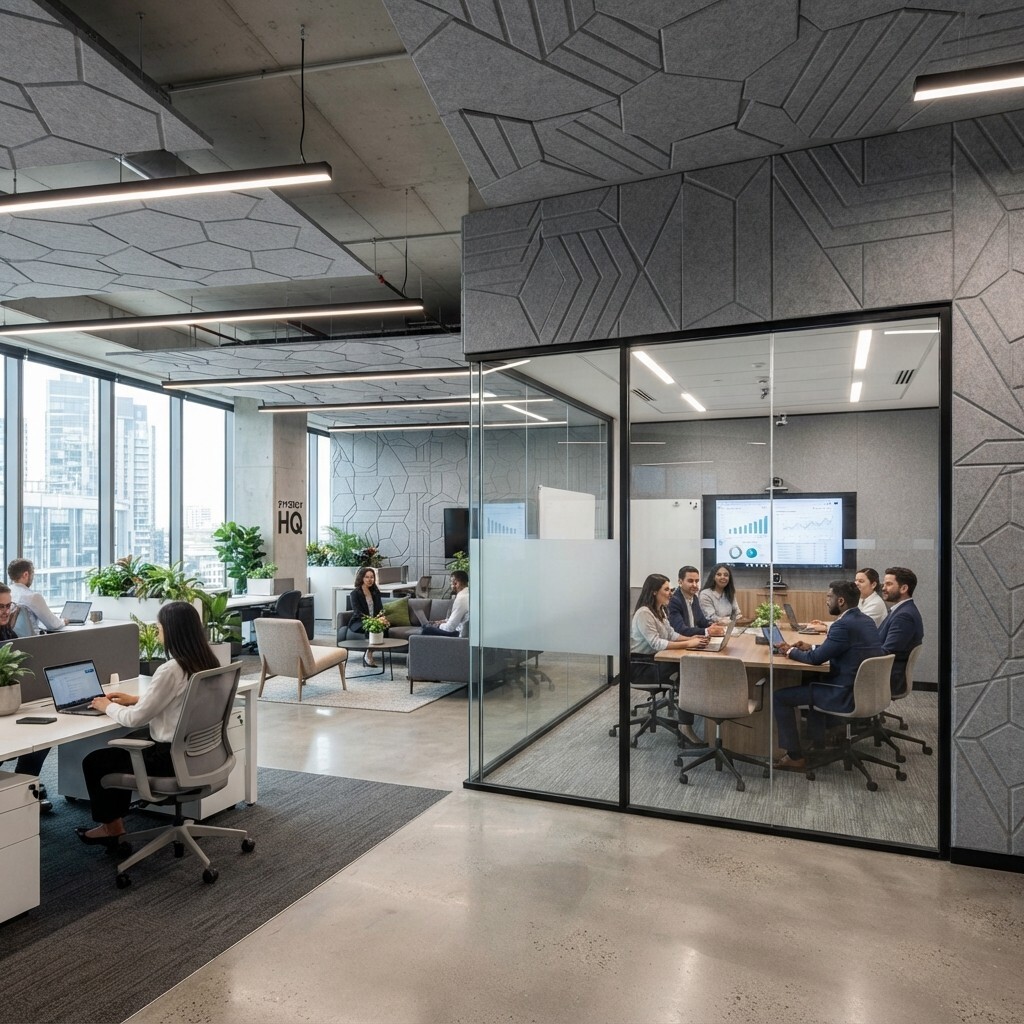
- Ceiling tiles and clouds: Address overhead reflections without taking up wall space. Essential for rooms with vaulted or hard ceilings.
- Desk dividers: Portable panels that sit on or around your desk, ideal for shared spaces or open-plan areas.
Budget-Friendly Soundproofing Quick Wins
You don’t need to spend thousands to make a meaningful difference. Start with these low-cost improvements:
Seal Gaps Around Doors and Windows
Sound travels through air gaps just like heat does. Apply weatherstripping tape around door frames, install a door sweep at the bottom, and use acoustic caulk to seal any cracks around window frames. Cost: $10–$50. Noise reduction: up to 10 dB.
Add Soft Furnishings
Thick curtains, area rugs, upholstered furniture, and bookshelves filled with books all absorb sound. If your office has hardwood floors and bare walls, simply adding a plush rug and heavy curtains can reduce echo noticeably.
Rearrange Your Desk Position
Move your desk away from shared walls and windows. Positioning yourself in the centre of the room or against an interior wall reduces exposure to external noise sources.
Use a White Noise Machine
White noise doesn’t block sound, but it masks it. A dedicated machine or even a fan can make intermittent noises (like a neighbour’s lawn mower) far less distracting by raising the ambient baseline.
Professional-Grade Soundproofing Solutions
When budget-friendly fixes aren’t enough, these upgrades deliver serious noise reduction:
Mass-Loaded Vinyl (MLV)
MLV is a dense, flexible material that can be installed behind drywall or hung on walls. It adds mass to thin surfaces, blocking airborne sound transmission. It’s especially effective for walls shared with noisy rooms or neighbours.
Double-Layer Drywall With Green Glue
Adding a second layer of drywall with Green Glue compound between the layers is one of the most effective wall treatments available. The viscoelastic compound converts sound energy into heat, reducing transmission by up to 15–20 dB.
Acoustic Doors and Windows
Standard hollow-core interior doors are essentially transparent to sound. Replacing yours with a solid-core door can cut noise by 10–15 dB. For windows, secondary glazing or acoustic-grade double glazing provides significant improvement over single-pane glass.
Decoupled Ceiling or Floor
For impact noise from above, a decoupled ceiling (resilient channels or sound isolation clips supporting a new layer of drywall) creates an air gap that dramatically reduces footstep and vibration noise.
DIY vs Professional Installation
Many acoustic improvements are straightforward DIY projects. Sealing gaps, hanging curtains, and mounting acoustic panels with adhesive strips or Z-clips require no specialised tools. Most homeowners can install a set of panels in an afternoon.
However, structural modifications—like adding MLV, decoupling ceilings, or installing acoustic doors—benefit from professional installation to ensure proper air-sealing and maximum effectiveness. Incorrect installation can leave gaps that undermine the entire investment.
For acoustic panel selection and placement advice, request a free consultation to get expert guidance tailored to your space.
Frequently Asked Questions
How much does it cost to soundproof a home office?
Basic improvements (sealing, soft furnishings, a few acoustic panels) typically cost $200–$800. A comprehensive acoustic panel installation runs $500–$2,000 depending on room size. Full structural soundproofing with MLV and upgraded doors can range from $2,000–$10,000. See our analysis of acoustic panel ROI for help justifying the investment.
Do acoustic panels block noise from outside?
Acoustic panels primarily absorb sound within the room, reducing echo and reverberation. They provide moderate reduction of airborne noise but are not designed to block heavy external noise like construction or traffic. For external noise, combine panels with sealing and mass-adding solutions.
What’s the difference between soundproofing and acoustic treatment?
Soundproofing blocks noise from entering or leaving a space (mass, sealing, decoupling). Acoustic treatment improves sound quality within a space by absorbing reflections and reducing echo. Most home offices benefit from both.
Will acoustic panels damage my walls?
Most modern panels mount with adhesive strips, impaling clips, or Z-brackets that cause minimal wall damage. Fabric-wrapped panels can be removed and rehung without visible marks when using adhesive mounting systems.
How many acoustic panels do I need for a home office?
A typical 10 × 12 foot home office usually needs 6–10 standard panels (2′ × 4′) for effective echo reduction. Coverage of 20–40% of wall surface area is the general target. Use the Imagine Acoustics panel estimator for a precise recommendation.
Create Your Ideal Work-From-Home Environment
A quieter home office isn’t a luxury—it’s a productivity multiplier. Whether you start with a $30 door sweep or invest in a full acoustic panel installation, every improvement compounds into better focus, clearer calls, and more professional results.
Ready to transform your home office acoustics? Explore Imagine Acoustics’ full range of acoustic solutions and find the perfect fit for your space.