You can spend thousands on a projector, a receiver and a set of speakers and still end up with a movie room where dialogue sounds muddy, explosions boom unevenly and every scene seems to echo. The reason is rarely the equipment — it’s the room. Home theatre acoustic panels control how sound bounces around your walls and ceiling, and they’re the single most cost-effective upgrade you can make to a media room. Better still, today’s decorative panels look like a design feature rather than a recording studio.
This guide covers why acoustics matter more than your speakers, the sound problems most home theatres have, which decorative panels solve them, where to place them, and how to pair panels with bass traps and diffusers.
Why Acoustics Matter More Than Your Speaker System
In a typical room, most of what reaches your ears isn’t the direct sound from your speakers — it’s sound that has already bounced off the walls, floor and ceiling. Those reflections arrive a fraction of a second after the direct sound and blur it. Hard surfaces like drywall, glass, tile and hardwood make the problem worse.
That’s why a modest speaker system in a treated room usually sounds clearer than a premium system in an untreated one. Treatment improves:
- Dialogue clarity — fewer reflections smearing voices
- Imaging — sound effects appear to come from precise places on screen
- Bass balance — fewer boomy spots and dead spots across the seating area
- Comfort — you can enjoy films at lower volumes without straining to hear
Common Sound Problems in Home Theatres
Echo and long reverberation
Rooms with bare walls and few soft furnishings hold onto sound. Clap your hands: if you hear a lingering “ring”, the room’s reverberation time is too long for clear movie audio.
Flutter echo
Parallel hard walls bounce sound back and forth rapidly, creating a buzzing or zinging tail. It’s especially noticeable in narrow basement media rooms.
Early reflections
Sound from your front speakers bounces off the side walls and ceiling and reaches you just after the direct sound. These early reflections are the main cause of vague, unfocused audio.
Bass buildup
Low frequencies collect in corners and along walls, creating booming peaks in some seats and thin bass in others. This is a room-shape problem and needs a different solution than mid- and high-frequency echo.
Decorative Acoustic Panels That Solve Theatre Sound Issues
Acoustic treatment no longer means grey foam stuck to the wall. Decorative panels absorb sound while adding texture, colour and warmth to the room.
Felt acoustic wall tiles
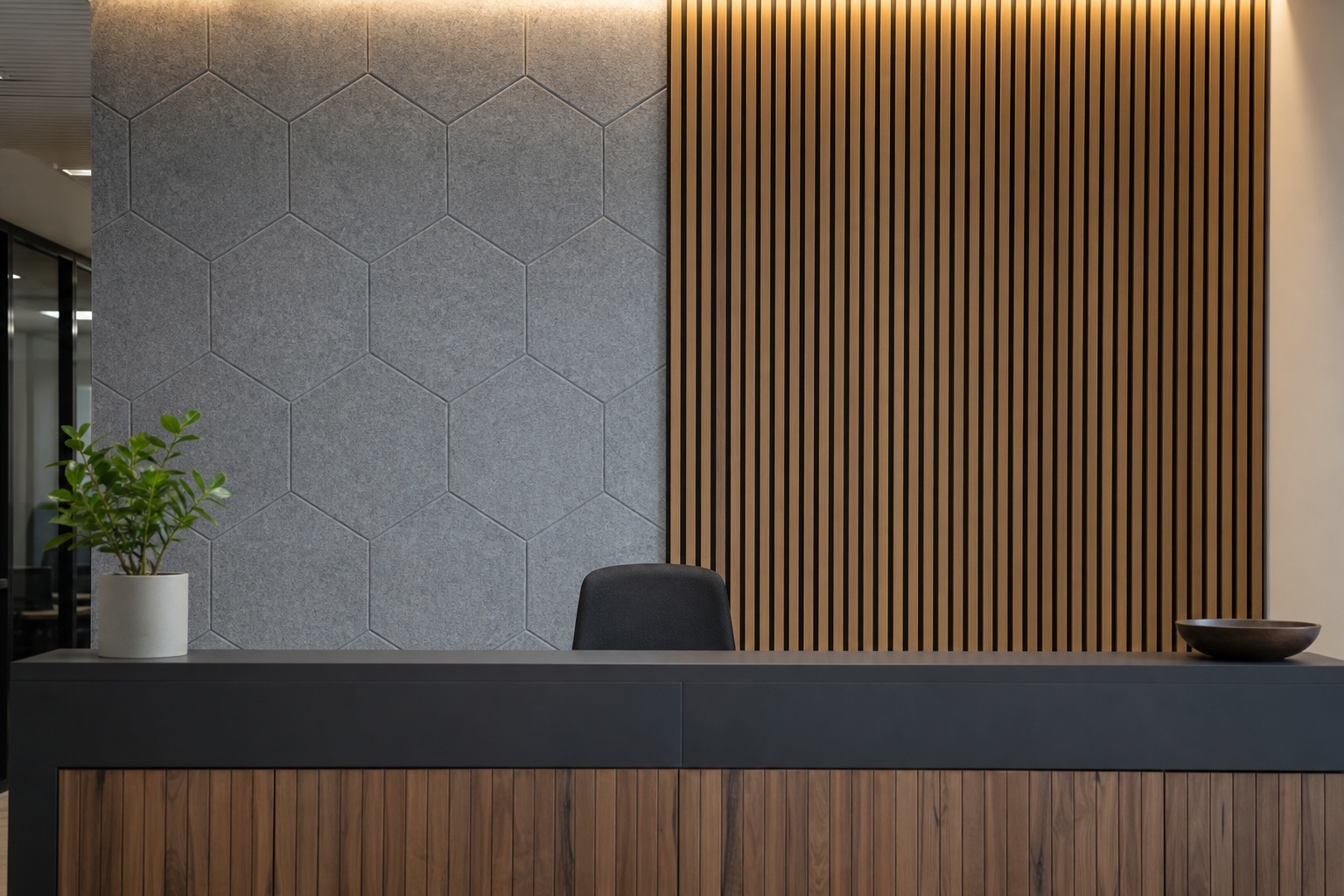
Made from dense PET felt, felt wall tiles come in geometric shapes and a wide range of colours. They can be arranged in patterns that turn a side wall into a feature, and they’re excellent at absorbing the mid and high frequencies that cause echo and harsh dialogue. Darker tones are popular in theatres because they reduce light reflection from the screen.
Slatted wood acoustic panels
Vertical wood slats mounted on an acoustic felt backing combine absorption with a warm, premium look. The gaps between the slats let sound reach the felt behind, while the wood surface adds a small amount of diffusion. They suit modern and cinema-lounge interiors equally well. Not sure which style fits your room? Compare them in our guide to felt wall tiles vs slatted wood panels.
Fabric-wrapped panels
Fabric-wrapped panels offer broad-band absorption in a clean, minimal format. They can be colour-matched to walls or used as a contrasting frame around the screen wall.
Ceiling panels and baffles
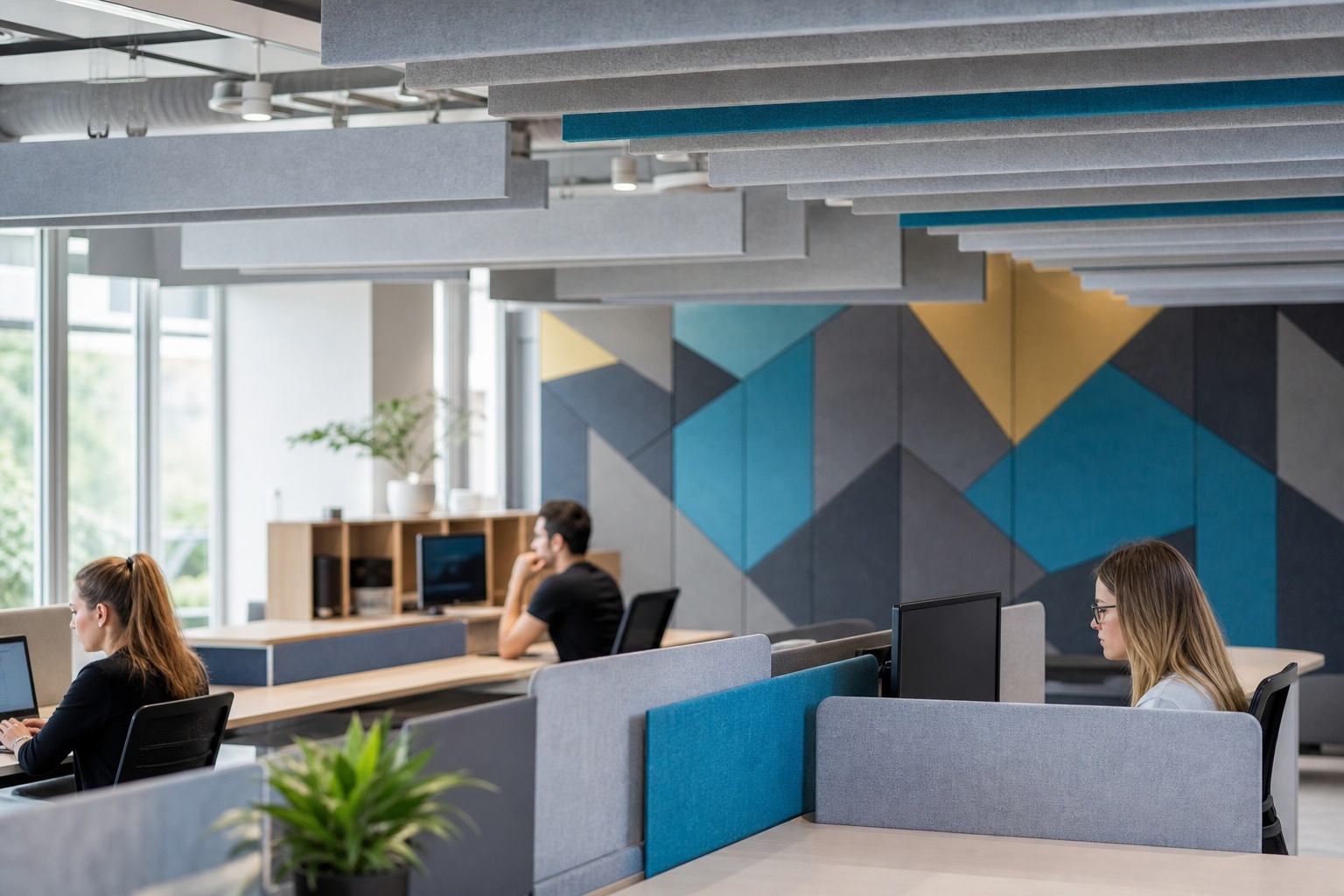
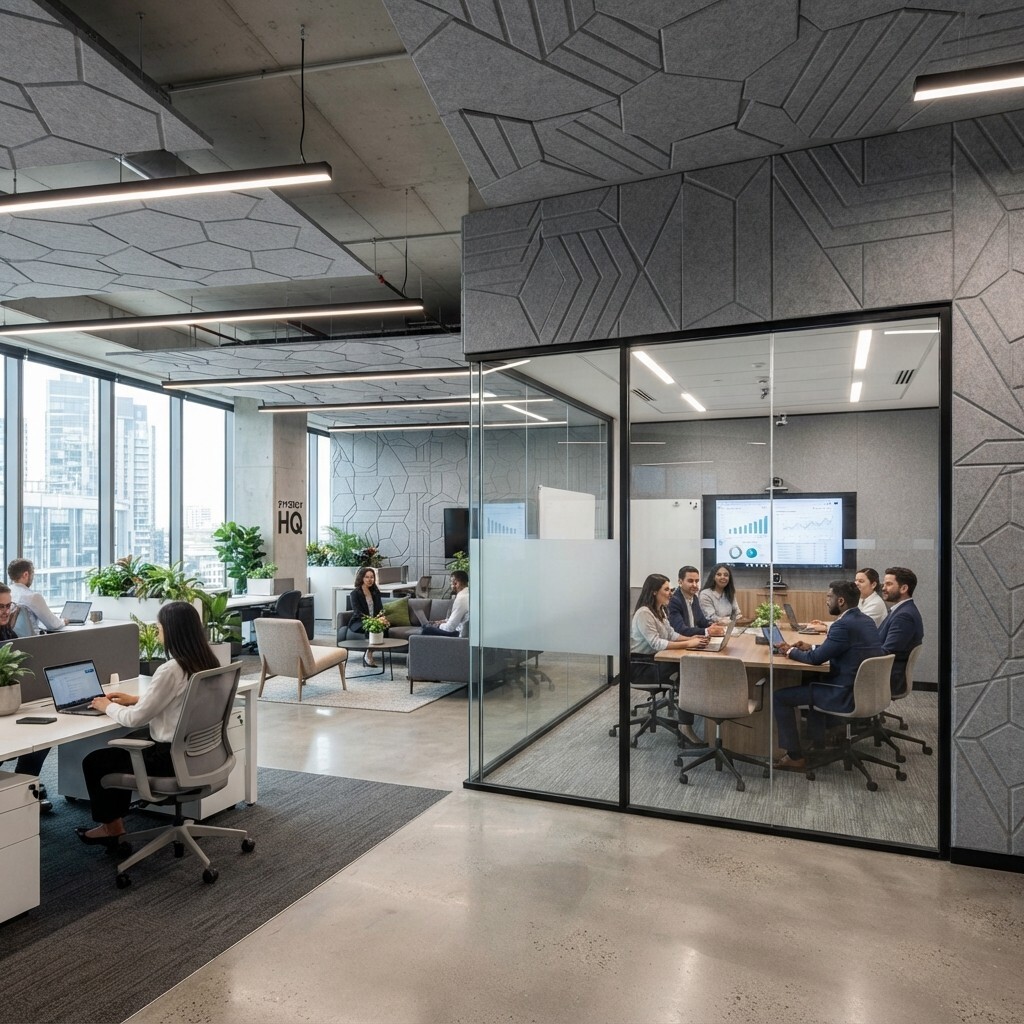
The ceiling is often the largest untreated surface in a media room. Suspended or surface-mounted acoustic ceiling panels absorb the reflections that bounce from speakers up and down to your seat.
Where to Place Panels in a Home Theatre
Placement matters as much as the product. Our full acoustic panel placement guide goes deeper, but these are the priorities for a movie room.
1. First reflection points on the side walls
Sit in the main seat and have someone slide a mirror along the side wall. Wherever you can see a front speaker in the mirror is a first reflection point. Treat these spots on both side walls first — it’s the biggest single improvement to clarity.
2. The front wall behind the speakers
Absorption behind and around the screen reduces reflections off the front wall and gives a more focused soundstage. Darker panels here also improve picture contrast.
3. The ceiling above the seating area
Use the same mirror method on the ceiling between the speakers and the main seat. One or two panels here make a noticeable difference.
4. The rear wall
The rear wall reflects sound back toward the audience. A mix of absorption and diffusion keeps the room from sounding dead while removing slap-back echo.
How much coverage do you need?
For most home theatres, treating 20–30% of the wall surface — concentrated at reflection points — is a sensible starting target. Dedicated cinema rooms may go higher. Avoid covering every surface with thin absorption, which can make the room sound muffled.
Pairing Acoustic Panels With Bass Traps and Diffusers
Decorative wall panels handle echo and early reflections. For a complete result, combine them with two other tools.
Bass traps
Thicker absorbers placed in room corners, where low frequencies build up, help even out bass across seats. Front corners behind the subwoofer are the usual starting point.
Diffusers
Diffusers scatter sound rather than absorbing it, keeping a sense of space in the room. Slatted wood panels and textured felt designs offer some diffusion naturally, and they work well on the rear wall.
If your theatre is in the basement, sound leaking to the rest of the house is a separate issue from in-room acoustics. Our guide on how to soundproof a basement explains the difference and what each approach can achieve.
Design-Forward Panel Options That Look as Good as They Sound
A home theatre is a room you want to spend time in. Treatment should feel like part of the design.
- Feature walls: arrange felt tiles in a gradient or geometric pattern on one side wall
- Cinema-lounge style: full-height walnut or oak slat panels on the side walls with dark felt behind the screen
- Dark, low-reflection palettes: charcoal, navy and deep green reduce glare and feel cinematic
- Integrated lighting: LED strips behind slat panels create a soft glow without bouncing light onto the screen
- Multi-use rooms: neutral tones and wood finishes let a media room double as a family room
Treating a Multi-Purpose Media Room
Not every home theatre is a dedicated cinema. Many are family rooms, basements or open-concept living spaces that also host movie nights. In these rooms, focus treatment on the side walls near the seating and the wall behind the TV, and choose finishes that suit everyday living. Felt tiles in lighter, warm tones or natural oak slat panels improve sound for films, music and conversation without making the room feel like a studio.
FAQ: Home Theatre Acoustic Panels
Do acoustic panels soundproof a home theatre?
No. Acoustic panels improve how the room sounds inside by controlling echo and reflections. Stopping sound from travelling to other rooms requires soundproofing construction such as added mass, decoupling and sealed gaps.
How many acoustic panels do I need for a home theatre?
Start with the first reflection points on the side walls, the front wall and the ceiling above the seats. For many rooms, that’s six to twelve panels, depending on size and panel dimensions.
Are felt panels or wood slat panels better for a movie room?
Both absorb echo well. Felt tiles offer more colour and pattern options; slat panels add a warm premium look and a bit of diffusion. Many theatres use both.
Can I install home theatre acoustic panels myself?
Yes. Most decorative panels mount with adhesive or simple mechanical fixings. Plan your layout from the reflection points first, then install.
Will acoustic panels make my room sound dead?
Not if you treat strategically. Combine absorption at reflection points with some diffusion on the rear wall to keep the room lively and natural.
Create a Movie Room That Sounds as Good as It Looks
The right home theatre acoustic panels turn a good system into a great experience: clearer dialogue, tighter bass and a soundstage that pulls you into the film. Start with the reflection points, add bass control in the corners, and choose finishes that make the room a space you love.
Planning a media room? Contact Imagine Acoustics to explore decorative felt and wood panel options and get help choosing the right layout for your space.