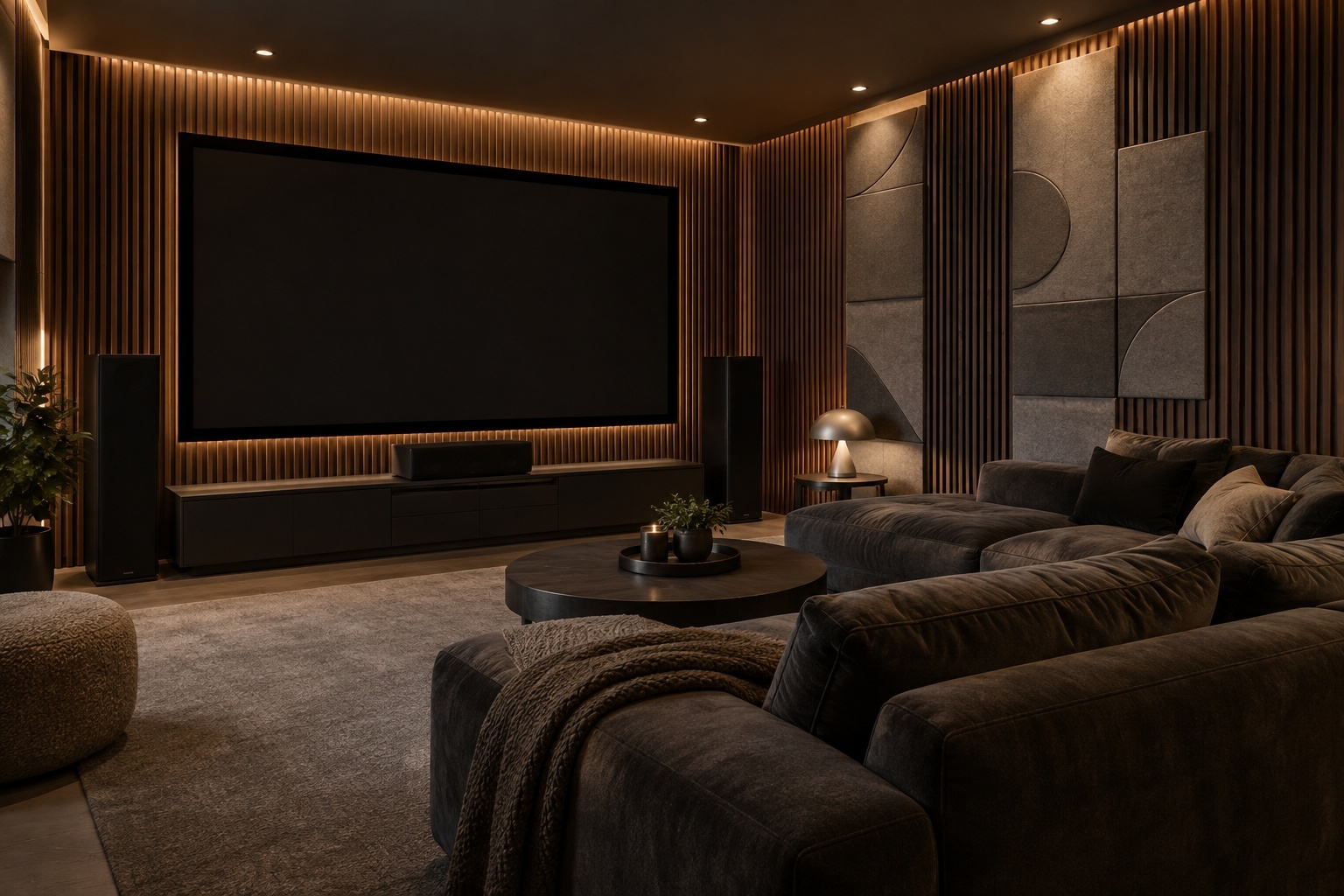
Walk into most classrooms built in the last fifty years and you’ll hear the problem before you see it: hard floors, painted block walls, large windows and a drop ceiling that does little to stop sound from bouncing around. Every chair scrape and side conversation lingers. Classroom acoustic panels are one of the simplest, most cost-effective ways to fix that, and today’s decorative designs make the room look better, too.
This guide is written for school administrators, facility managers, architects and designers planning a classroom, library or gym upgrade. We’ll cover why noise matters, the acoustic standards to aim for, which panel types hold up in a school setting, where to place them and how to budget for a multi-room project.
How Classroom Noise Affects Student Focus and Teacher Health
Learning depends on hearing clearly. When sound reflects off hard surfaces for too long, each word blurs into the next, and students have to work harder to separate the teacher’s voice from background noise.
The impact on students
Speech intelligibility drops quickly in reverberant rooms. Students at the back of the class, children learning in a second language, and those with hearing loss, attention difficulties or auditory processing challenges are hit hardest. Younger children are also still developing the listening skills adults use to “fill in” missed words, so a noisy room costs them more comprehension than it costs us.
The impact on teachers
Teachers raise their voices to be heard over reverberation, often for six hours a day. Voice strain is a well-known occupational issue in teaching, and constant noise adds to fatigue and stress. Reducing echo means teachers can speak at a natural level and still be understood across the room.
Acoustic Standards for Educational Spaces (ANSI S12.60)
The most widely referenced benchmark for classroom acoustics in North America is ANSI/ASA S12.60. Its key performance targets for core learning spaces are:
- Background noise: no more than 35 dBA in an unoccupied classroom (from HVAC, lighting and outside noise).
- Reverberation time (RT60): a maximum of about 0.6 seconds for classrooms under roughly 10,000 cubic feet, and about 0.7 seconds for rooms between 10,000 and 20,000 cubic feet.
Many existing classrooms measure well above these targets, sometimes over a full second of reverberation. Acoustic panels don’t lower HVAC noise, but they are the primary tool for bringing reverberation time down. An acoustic consultant can measure the current RT60 and model how much absorption a room needs; for straightforward rooms, our panels-needed estimator gives a useful starting point.
Panel Types Suited for Schools
Schools are tough environments. Panels need to absorb sound well, survive daily wear, meet fire-safety requirements and stay easy to clean.
Durable PET felt panels
Felt panels made from recycled PET are the workhorse for classrooms. They are lightweight, impact-resistant, don’t shed fibres, and come in a wide range of colours and shapes. Thicker panels and panels mounted with an air gap absorb more low- and mid-frequency sound, which is where speech lives.
Wipeable and tackable surfaces
Felt wall tiles double as pin-up boards, giving teachers a place to display student work without damaging the absorbing surface. Felt can be vacuumed or spot-cleaned, which suits busy classrooms and libraries.
Safety-rated materials
Always confirm the fire classification of any product for the space it’s going into. In Canada, interior finishes are typically evaluated against CAN/ULC-S102 flame-spread requirements set out in the building code; ask for test documentation as part of your procurement process.
Ceiling baffles and clouds
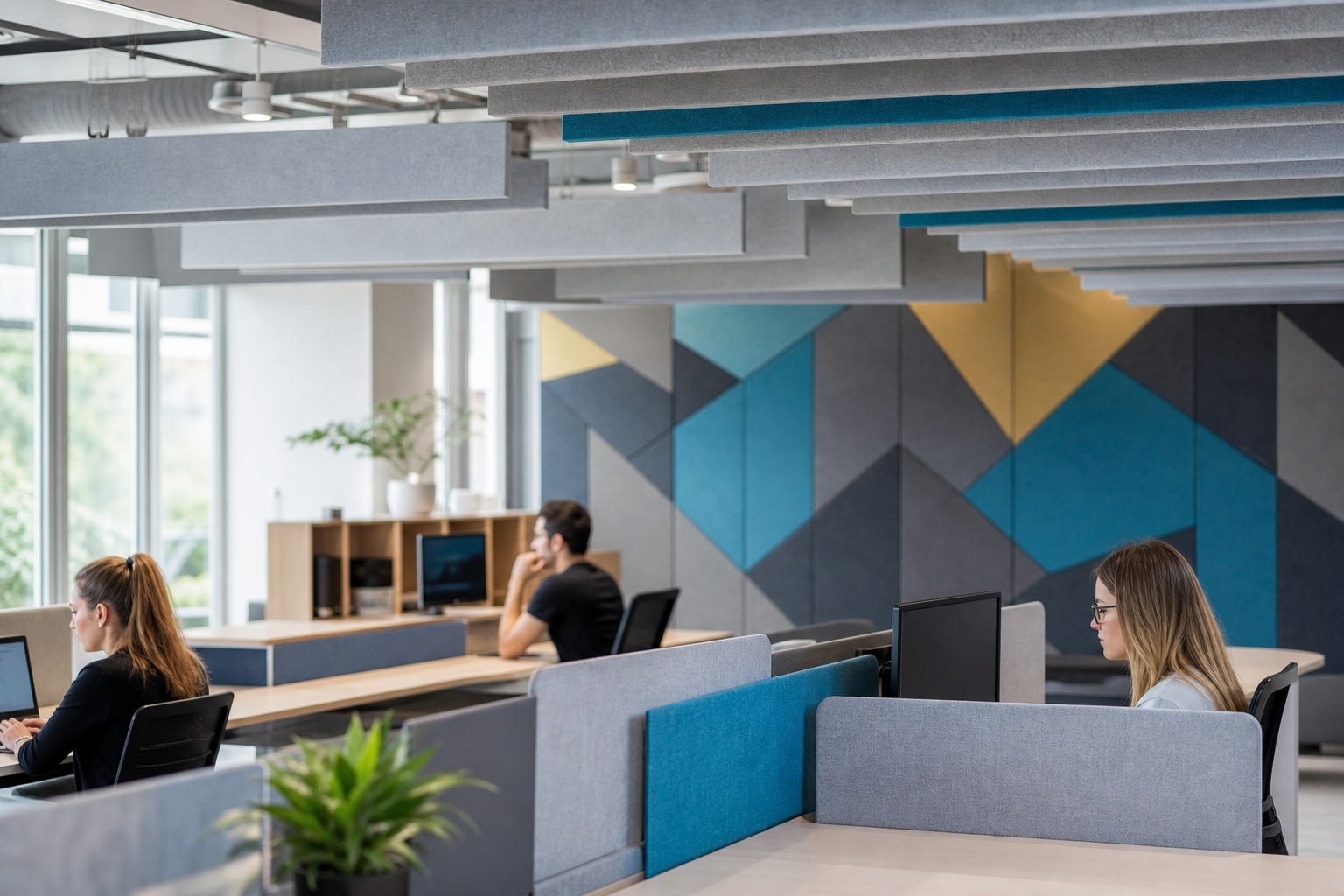
Ceilings are often the largest untreated surface in a room. Hanging felt baffles or clouds add absorption without using wall space that teachers need for whiteboards, displays and storage. They’re especially valuable in gymnasiums and open learning commons. Explore options in our acoustic ceiling solutions.
Placement Strategies for Classrooms, Libraries and Gymnasiums
Classrooms
Prioritize the ceiling and the upper portions of the rear and side walls. The rear wall facing the teacher is a common source of strong reflections, so treating it reduces echo without dulling the teacher’s voice at the front. Aim to cover a meaningful percentage of the total surface area rather than placing one or two decorative panels. Our acoustic panel placement guide explains first-reflection points and coverage in more detail.
Libraries and learning commons
Libraries combine quiet study with group work, so zoning matters. Freestanding dividers and desk screens create quieter pockets, while ceiling clouds over collaboration areas keep conversation from carrying. Many of the same principles apply to open workplaces; see our guide to acoustic solutions for open-plan spaces.
Gymnasiums and cafeterias
These large, hard-surfaced rooms can have reverberation times of several seconds. Mount impact-resistant panels high on walls, out of the reach of balls and carts, and add ceiling baffles in volume. Even partial treatment makes announcements, assemblies and lunchtime noticeably more comfortable.
Music rooms and resource rooms
Music rooms need a balance of absorption and diffusion so ensembles can still hear themselves. Small resource or therapy rooms used for one-on-one support benefit from extra absorption for speech clarity and privacy.
Decorative Options That Fit School Environments
Acoustic treatment no longer has to look institutional. Decorative felt panels come in dozens of colours and shapes, letting you:
- Reinforce school colours or wayfinding (for example, a colour per grade or wing)
- Create calming palettes in sensory or resource rooms
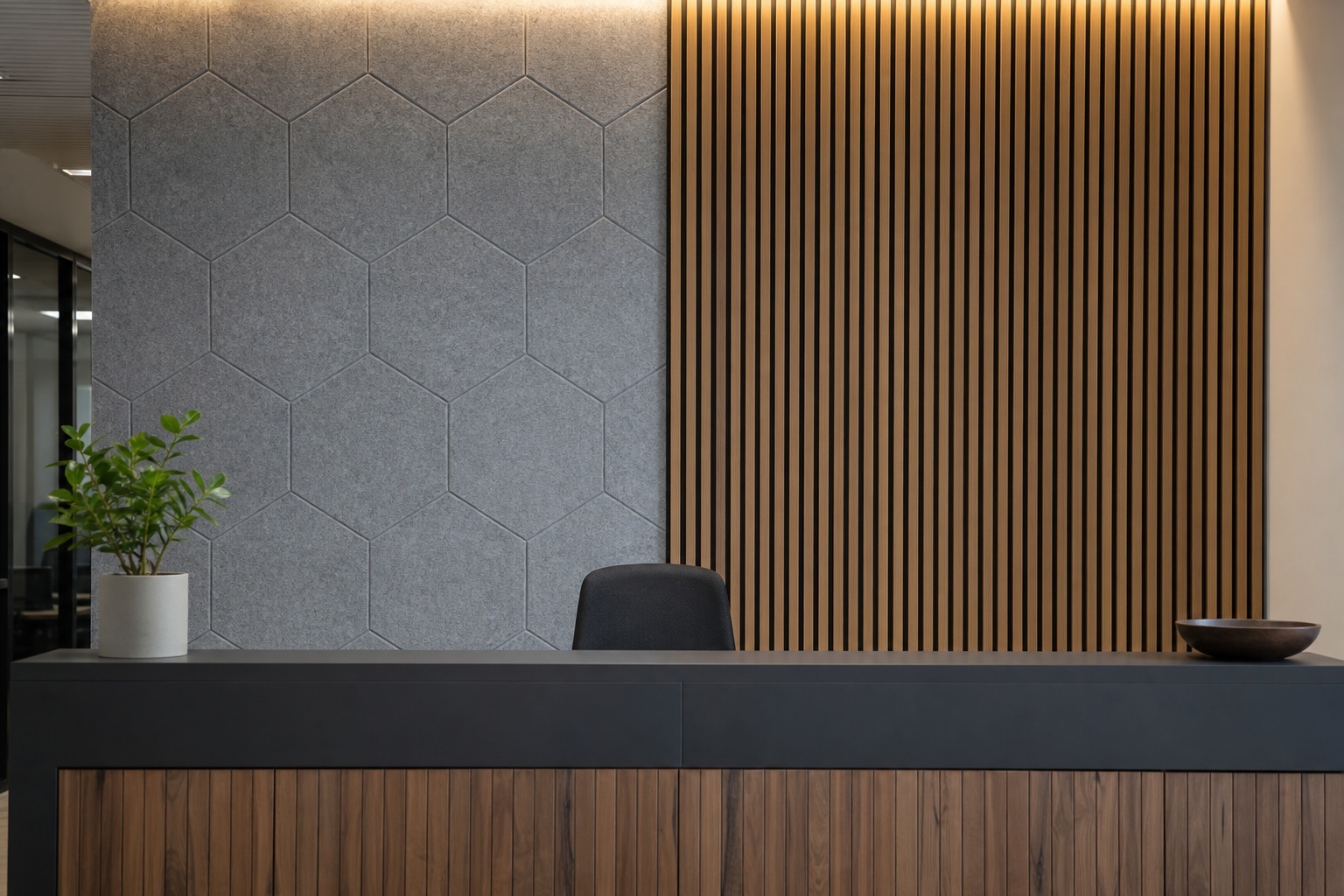
- Use geometric felt tiles as feature walls in libraries and entrances
- Combine absorption with display space through tackable panels
- Add slatted wood or felt blade ceilings in staff rooms and administration areas
Custom shapes and printed panels are also available for murals, mascots or branded entrance features, which is a great way to involve students in a renovation project.
Budgeting and Bulk Pricing Considerations for Schools
School budgets are tight, so plan for maximum impact per dollar:
- Start with a pilot room. Treat one classroom, measure the before-and-after difference, and collect teacher feedback to support a wider rollout.
- Standardize. Using the same panel sizes and colours across multiple rooms simplifies ordering and can unlock volume pricing.
- Phase the work. Prioritize the noisiest spaces and early-years classrooms first, then expand over summer breaks.
- Factor in installation. Lightweight felt panels can often be installed by facilities staff, reducing labour costs.
- Request samples. Order samples to check colour, texture and durability with staff before committing.
Measuring the Results
Acoustic upgrades are easier to justify, and to expand, when you can show the difference they make. Build simple measurement into your project:
- Before-and-after reverberation readings. An acoustic consultant can measure RT60 before installation and again afterwards. Even a basic smartphone app gives a rough comparison for internal reporting.
- Teacher surveys. Ask staff to rate vocal strain, how often they repeat instructions and how settled the class feels, before and a few weeks after installation.
- Student feedback. Older students can describe how easy it is to hear in different parts of the room; younger students’ behaviour during group work often tells the story on its own.
- Observation. Principals and resource teachers often notice calmer transitions and fewer disruptions in treated rooms.
Documenting these results helps make the case to school boards, parent councils and funding committees for treating additional rooms. For a broader framework, see our article on how facilities measure acoustic panel ROI.
FAQ
How many acoustic panels does a classroom need?
It depends on room size, ceiling height and existing finishes. As a rule of thumb, typical classrooms need treatment covering roughly 20 to 30 percent of wall and ceiling area to approach recommended reverberation targets. An estimator or acoustic consultant can refine that number.
Are felt acoustic panels safe for schools?
Quality PET felt panels contain no loose fibres and are durable in high-traffic areas. Always confirm fire-rating documentation meets your local building code requirements.
Do classroom acoustic panels block noise from the hallway?
No. Panels absorb sound inside the room, reducing echo. Blocking sound between rooms requires changes to walls, doors and seals.
Can teachers pin artwork on acoustic panels?
Yes, felt wall tiles can serve as tackboards. Pins have a negligible effect on performance.
How do we clean acoustic panels in a school?
Vacuum with a soft brush attachment and spot-clean with mild soap and water as needed.
Create Better Learning Spaces
Classroom acoustic panels improve speech clarity, ease strain on teachers and create calmer, more welcoming rooms for every student. With durable felt, ceiling baffles and decorative designs, schools can meet acoustic goals without sacrificing style or budget.
Planning a classroom, library or gym upgrade? Contact Imagine Acoustics for product recommendations, samples and volume pricing for your school.